
THE JESS PROFILE / A CONVERSATION
The world
according to Jess.
On good taste, honest advice, complicated journeys, and why the best trip should feel unmistakably like yours.
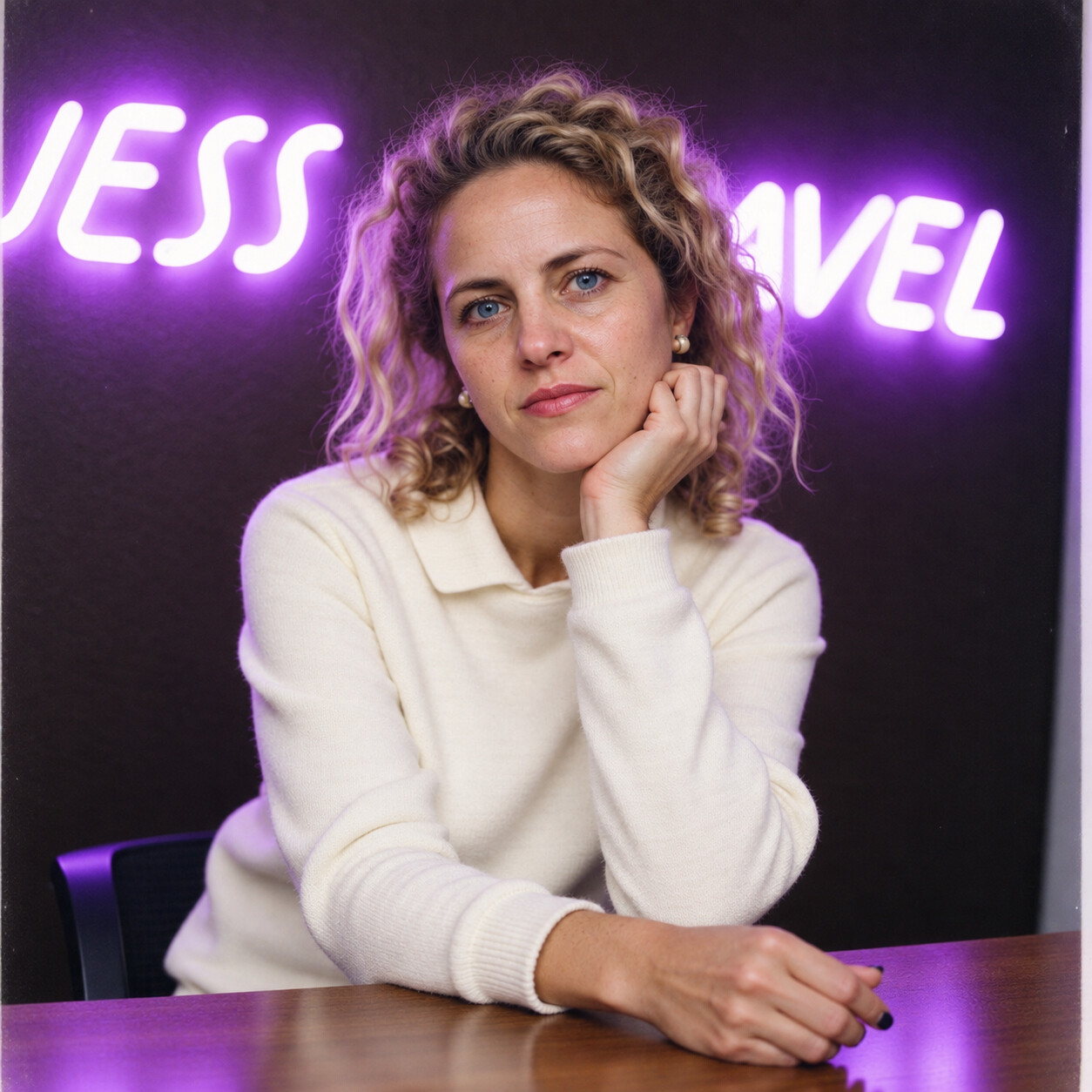
Jess Dorsey has made a philosophy out of paying attention.
She was born in Spain, built a life in Central Florida, and still works in medicine as a nurse anesthetist. Travel planning arrived as a side pursuit and became something more revealing: a way to translate another person’s taste, energy, contradictions, and very limited time into a journey that could belong only to them.
The itineraries may involve trains, ferries, small hotels, drivers, dinner reservations, and the occasional funicular. But the machinery is never the point. Jess is interested in how a trip feels once the machinery disappears—when nobody has to watch the clock, arbitrate the group chat, or wonder whether the next decision is the right one.
Her alter ego wears a navy suit and a dusty-peach cape. The real Jess is less interested in rescuing anyone than in making them feel thoroughly, intelligently looked after. The character is a wink. The care behind it is not.
THE PHILOSOPHY, IN HER WORDS
A conversation about the art of going somewhere.
What are people really paying a travel planner for?
Jess: They are paying someone to care as much as they do. Not to send a list of hotels and disappear. They are handing over the mental load—the research, the sequencing, the second-guessing—and trusting me to keep paying attention after the obvious choices are made.
Where does a trip begin for you?
Jess: With a feeling, not a pin on a map. I want to know who you are on an ordinary Tuesday, what exhausts you, what makes you stay at dinner too long, and whether an empty afternoon sounds luxurious or terrifying. The destination comes into focus after that.
“A beautiful trip is not the one with the most reservations. It is the one that feels like it belonged to you.”
What does luxury mean now?
Jess: Luxury is not hearing your phone buzz. It is not being the family cruise director. It is arriving at the right place at the right time and feeling like the day has been waiting for you. Sometimes that requires an extraordinary hotel. Sometimes it requires restraint.
You are unusually direct about planning fees and commissions. Why?
Jess: The planning fee pays for the planning, which gives me the freedom to have an opinion. We sometimes earn a supplier commission at no added cost to the traveler, and sometimes we do not. Either way, the recommendation has to fit the person taking the trip. Otherwise, what exactly are they paying me for?
Do complicated itineraries make you nervous?
Jess: They make me curious. The train, the ferry, the transfer, the tiny hotel you found at midnight—those details can become part of the memory. My job is to solve them so well that you experience the journey without carrying the logistics.
What do you mean when you say, “It’s all part of the adventure”?
Jess: It is not an excuse for sloppy planning. It means a good plan creates enough confidence for real life to happen inside it. Rain arrives. A road closes. You miss a turn and find lunch. The point is not to control every second. The point is to make room for the story.
Why the superhero?
Jess: Because “someone has this” is a powerful feeling—and because travel has enough beige corporate language already. The cape lets us be playful about a serious promise: there is a real woman pulling the strings, reading the details, and caring what happens next.
What should someone feel when they come home?
Jess: More like themselves. A little less impressed by how busy they are. Maybe already wondering where they could go next. We are all going to run out of somedays eventually. I would rather use one.